Valencia · Culture · Gastronomy
Valencia Central Market: History, Gastronomy and Local Produce
Discover the history, architecture, flavours and traditions of Valencia Central Market, a vibrant destination where local food culture meets the daily life of the city.
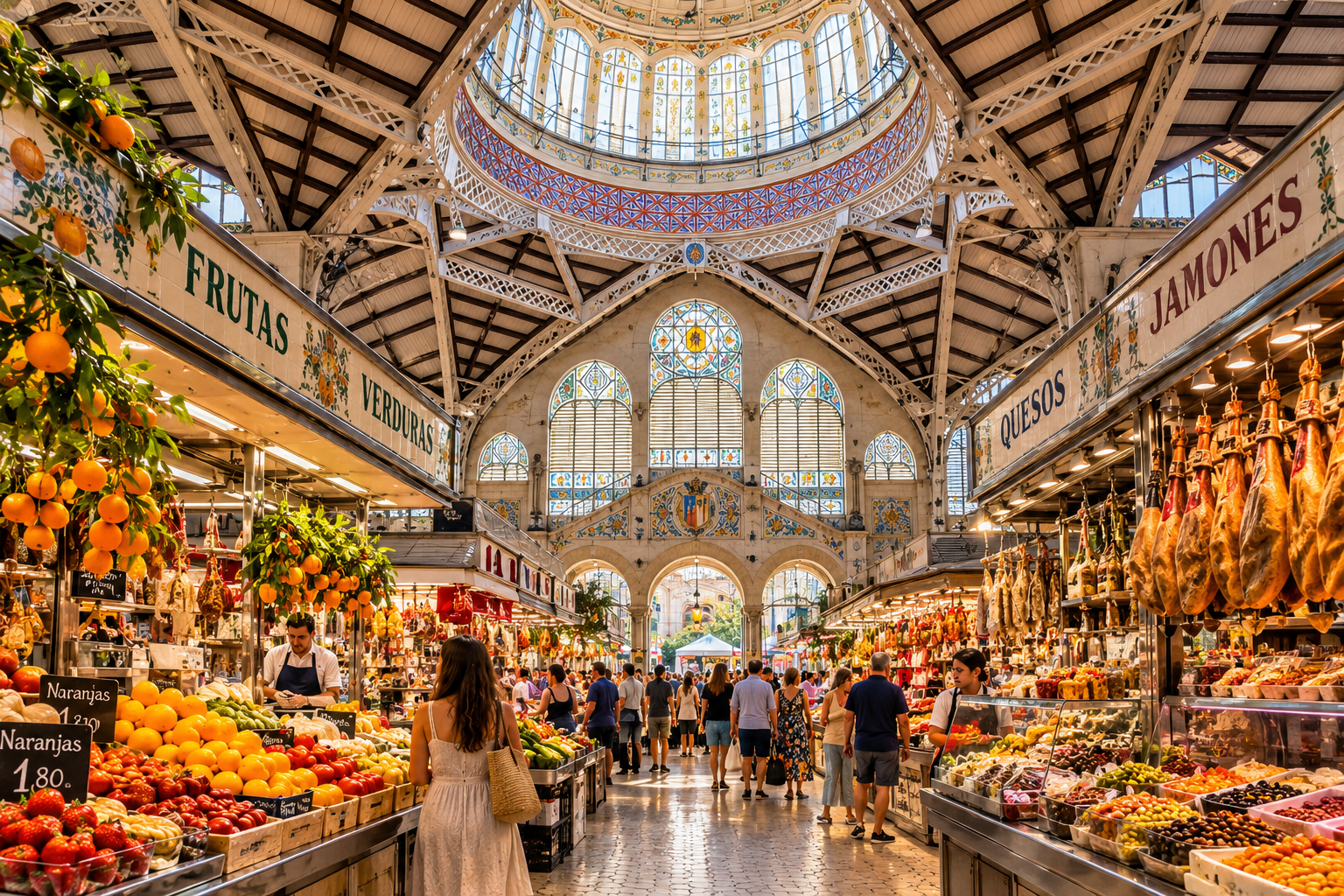
Located in the heart of Valencia’s historic centre, Valencia Central Market is one of the city’s most recognisable landmarks. Known locally as Mercado Central, it brings together fresh Mediterranean produce, traditional Valencian ingredients, specialist food stalls and remarkable architecture beneath one impressive roof.
For visitors, the market offers much more than an opportunity to buy food. It is a place to experience the rhythm of local life, discover regional flavours and appreciate a building that reflects Valencia’s commercial and cultural history.
The History of Valencia Central Market
The history of Valencia Central Market is closely connected to the city’s long tradition of commerce. Markets have played an important role in Valencia for centuries, providing residents with access to agricultural products, seafood, meat, spices and other everyday essentials.
As the city expanded, the need for a larger and more organised market became increasingly apparent. The current building was developed in the early twentieth century and officially opened in 1928. Its construction represented a modern approach to food distribution while preserving the importance of traditional market culture.
Today, the market continues to serve both residents and visitors. Its enduring popularity demonstrates how a historic commercial space can remain relevant in a changing urban environment.
Modernista Architecture and Interior Design
One of the first things visitors notice is the building itself. Valencia Central Market is an outstanding example of Valencian Modernista architecture, a style that combines decorative detail, natural inspiration and innovative construction techniques.
The exterior features elaborate ornamentation, while the interior is defined by its spacious layout, iron structures, colourful ceramic details and extensive use of glass. The large central dome and stained-glass elements allow natural light to illuminate the market floor, creating an atmosphere that changes throughout the day.
Architectural details are not merely decorative. The building was designed to accommodate the practical demands of a busy food market while offering a visually distinctive public space.
Even visitors who are not planning to shop can appreciate the combination of engineering, craftsmanship and artistic design. The market is a reminder that everyday commercial buildings can also become important elements of a city’s architectural heritage.
Fresh Produce and Mediterranean Flavours
Food is at the centre of the market’s identity. The stalls offer a broad selection of fresh ingredients, reflecting the agricultural richness of the Valencian region and the wider Mediterranean diet.
Seasonal Fruit and Vegetables
Fruit and vegetable stalls display seasonal produce in a variety of colours, textures and aromas. Oranges, mandarins, tomatoes, peppers, artichokes and other regional products feature prominently depending on the season.
Valencia is particularly associated with citrus cultivation, and its agricultural surroundings have helped shape the area’s culinary traditions. Shopping at the market provides an opportunity to discover local ingredients and learn how seasonality influences regional cooking.
Fish and Seafood
The city’s coastal location has made fish and seafood an important part of local gastronomy. Market stalls offer a range of fresh catches and seafood, with the selection varying according to availability and season.
These ingredients are essential to many Mediterranean dishes and are closely associated with Valencia’s culinary identity, including the wider tradition of rice-based recipes.
Meat, Cheese and Traditional Specialities
Other stalls specialise in meat, cured products, cheeses, olives, nuts, spices and prepared foods. Together, they reveal the diversity of ingredients used in Valencian and Spanish cooking.
For visitors interested in food, these counters offer an opportunity to explore unfamiliar products, ask questions and discover ingredients that may be difficult to find elsewhere.
Valencian Gastronomy: What to Discover
Valencia’s food culture is shaped by its proximity to the Mediterranean Sea, its agricultural landscape and its long-standing rice-growing tradition. The Central Market brings many of these influences together in one place.
Although the market is primarily a place to buy ingredients, it can also be a useful starting point for discovering the region’s best-known dishes.
- Valencian paella: The internationally recognised rice dish traditionally associated with Valencia and its surrounding agricultural areas.
- Seasonal rice dishes: Recipes that combine rice with vegetables, seafood or meat, depending on local traditions.
- Fresh citrus fruit: Oranges and other citrus varieties that reflect the importance of regional agriculture.
- Traditional cured products: Specialities that form part of Spain’s wider food heritage.
- Local sweets and snacks: Products that offer a taste of the region’s everyday culinary customs.
Not every dish is prepared or served inside the market itself. However, exploring its ingredients provides a better understanding of the food traditions found throughout Valencia.
A Living Part of Valencia’s Local Community
Despite its popularity with tourists, Valencia Central Market remains an important place for everyday shopping. Local residents visit to buy ingredients, compare products and maintain relationships with familiar vendors.
This interaction between sellers and customers is part of what makes traditional markets distinctive. Knowledge about food quality, preparation methods and seasonal availability is often passed on through conversation and experience.
The market also reflects the diversity of contemporary Valencia. Visitors, long-time residents, chefs and independent food enthusiasts share the same space, each approaching it from a different perspective.
Beyond gastronomy, the market forms part of a wider cultural landscape. Anyone wishing to explore the city’s artistic identity and heritage can also discover Valencia’s artistic and cultural heritage, which complements a visit to its historic centre.
Tips for Visiting Valencia Central Market
A little planning can make a visit more enjoyable, especially for travellers who want to explore both the architecture and the food stalls.
- Visit in the morning: Earlier hours generally offer a lively atmosphere and a chance to see the market during its main shopping period.
- Look up as well as around: Take time to appreciate the dome, glasswork, iron structures and decorative architectural details.
- Explore beyond familiar foods: Ask vendors about seasonal ingredients and regional specialities.
- Bring a reusable bag: It can be useful if you plan to buy packaged foods or local products to take away.
- Check current opening hours: Hours and individual stall availability can vary, so confirm details before travelling.
- Respect the working environment: The market is a functioning commercial space, so avoid blocking busy counters and ask before taking close-up photographs of people or their stalls.
The market is situated in the historic centre, making it convenient to combine a visit with a walk through nearby streets and other architectural landmarks. Allow enough time to explore at a relaxed pace rather than simply passing through.
Why Valencia Central Market Is Worth Visiting
Valencia Central Market brings together several aspects of the city’s identity: architecture, commerce, agriculture, gastronomy and community life. Its significance lies not only in the products sold there but also in the traditions and daily interactions that continue to shape the space.
For food lovers, it is an opportunity to discover the ingredients behind Mediterranean cooking. For architecture enthusiasts, it offers an impressive example of Modernista design. For travellers, it provides a more immediate connection with local life than many conventional sightseeing attractions.
Whether you are interested in regional cuisine, historic buildings or the atmosphere of traditional markets, this landmark offers a rewarding way to experience Valencia through its everyday culture.
Frequently Asked Questions
What is Valencia Central Market famous for?
It is known for its striking Modernista architecture, fresh local produce, Mediterranean ingredients and role in Valencia’s food culture.
When did Valencia Central Market open?
The current market building officially opened in 1928, following its development in the early twentieth century.
What can you buy at the market?
Depending on the stall and season, you can find fruit, vegetables, fish, seafood, meat, cheese, cured products, spices, nuts and other food specialities.
Is Valencia Central Market worth visiting if you are not shopping?
Yes. Its architecture, lively atmosphere and connection to local traditions make it interesting even for visitors who do not intend to buy anything.
What is the best time to visit?
Morning is generally a good choice for experiencing the market during its main trading hours. Check current opening times before your visit, particularly around public holidays.